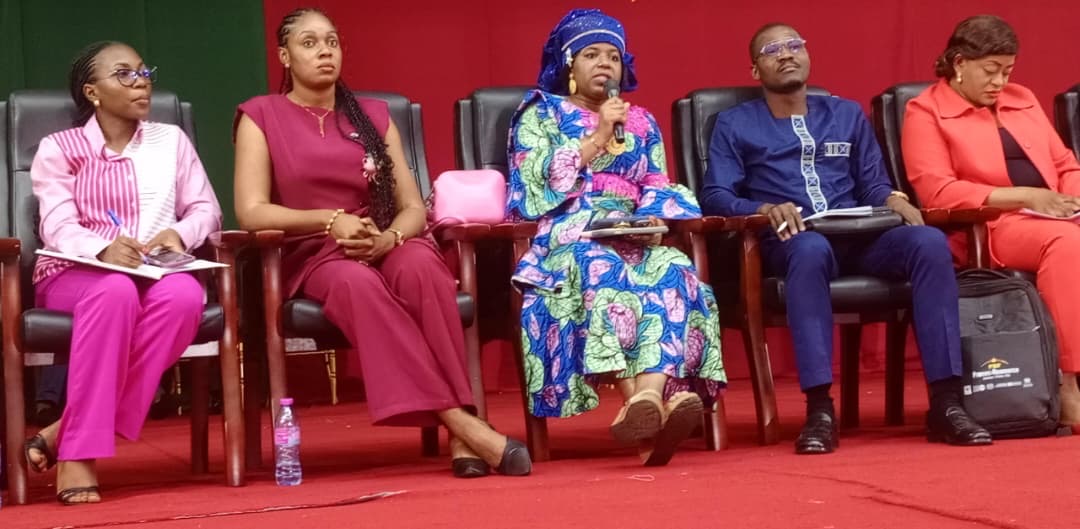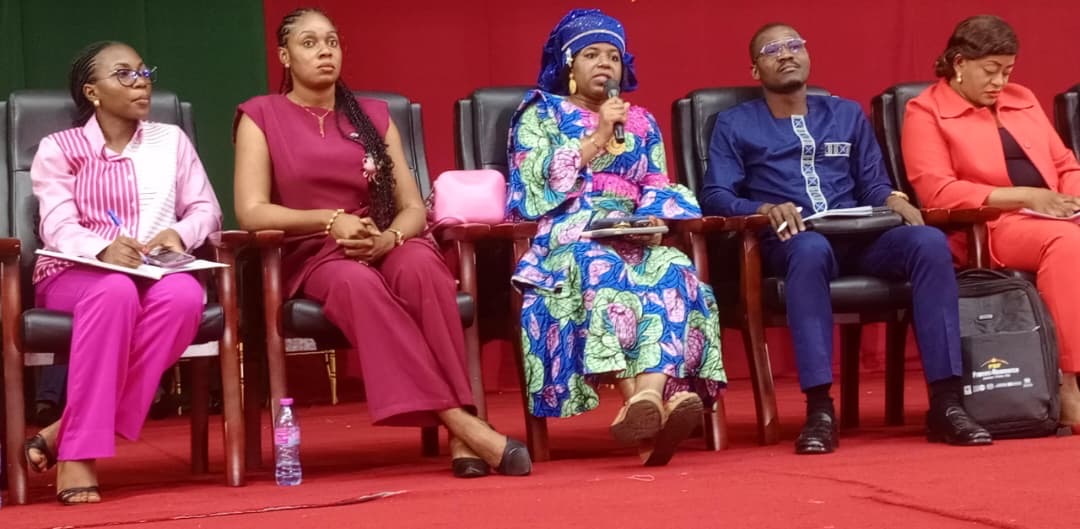
This third panel was dedicated to the National Youth, Peace and Security Action Plan (NAP-YPS), a strategic framework designed to position young people in Cameroon as key actors in sustainable peace and national stability.
The session was moderated by ACHA LEKE Christian and MESSAMBE Cédric, who emphasized at the outset that “lasting peace cannot be consolidated without the active, responsible, and structured involvement of young people.”
Presentation of the National Youth, Peace and Security Plan – MINJEC
The first presentation was delivered by the representative of MINJEC, who introduced the National Youth, Peace and Security Action Plan (2025–2030).
He explained that the Plan aligns with United Nations Security Council Resolution 2250 and the African Union Continental Framework, and seeks to make young people major stakeholders in peacebuilding and social cohesion.
He stated:
“The NAP-YPS positions young people not only as beneficiaries of public policies, but as strategic partners in conflict prevention and peace consolidation.”
Objectives of the Plan
-
Strengthen the role of young people as agents of peace, resilience, and social cohesion
-
Actively involve youth in conflict prevention and transformation
-
Promote a culture of peaceful and inclusive coexistence
-
Ensure inclusive governance through youth participation in decision-making processes
Key Areas of Action
-
Youth engagement and participation in conflict prevention
-
Socio-economic development to reduce vulnerabilities
-
Social justice and digital transformation, including cybersecurity for youth protection
Contribution of UNFPA
The representative of UNFPA highlighted the organization’s strategic role in supporting the development of the Action Plan.
He noted:
“Effective youth participation in peacebuilding requires resources, safe spaces for expression, and concrete opportunities for engagement.”
UNFPA contributed to resource mobilization, analysis of root causes of youth-related conflicts, and the integration of preventive strategies into the Plan.
Intervention by Youth, Peace and Security Consultant – Dr. ZAMBO ZAMBO
Dr. ZAMBO ZAMBO, Consultant on Youth, Peace and Security, discussed the many challenges young people face in becoming leaders and agents of peace.
He cited:
-
unemployment and precarious living conditions
-
violence and insecurity
-
hate speech
-
drug abuse
-
underemployment
He encouraged young people by stating:
“Youth resilience and dynamism are essential to transform these challenges into opportunities for lasting peace.”
Contribution of the Ministry of Public Health (MINSANTE)
The representative of MINSANTE presented the National Strategic Plan (2024–2030) to combat drug abuse.
This plan focuses on:
-
reducing drug supply
-
reducing demand through education and awareness
-
reducing health risks
-
strengthening institutional responses
He pointed out that:
“Social stigma and substance abuse seriously undermine the mental health of young people and weaken their role in social stability.”
He encouraged youth to explore funding opportunities for youth projects available through the Ministry.
Position of the Cameroon National Youth Council (CNJC)
The representative of the CNJC reaffirmed that young people are at the heart of the NAP-YPS, as drivers of change.
“Young people are both beneficiaries and engines of change for peacebuilding and sustainable development.”
Role of the CNJC
The CNJC serves as:
-
the voice of youth
-
a consultative platform
-
an advocate for inclusion
-
a promoter of youth socio-economic integration and civic education
CNJC Strategies
-
Consultation and dialogue
-
Advocacy and representation
-
Youth socio-economic integration
-
Civic education (Moral, Civic, and Entrepreneurial Re-armament – REAMORCE)
-
Coordination of youth organizations
Call from the Secretariat of State for Defence (SED)
The representative of the SED called on young people to actively contribute to national security:
“Security is everyone’s responsibility. Every young person has the duty to report any act that threatens peace.”
Examples mentioned included group drug use, violence, sexual assault, and banditry. He reminded participants of the toll-free emergency number 1501 for reporting such cases.
Engagement of the International Labour Organization (ILO)
The representative of the ILO stressed that promoting peace also requires the promotion of decent and equitable work for all.
“A job that excludes or creates inequalities can become a source of conflict. Work must contribute to social cohesion and peace.”
He emphasized the strong link between employment, dignity, and social stability.
This panel demonstrated that lasting peace depends on an engaged, empowered, and responsible youth, fully integrated into governance, development, and security processes.