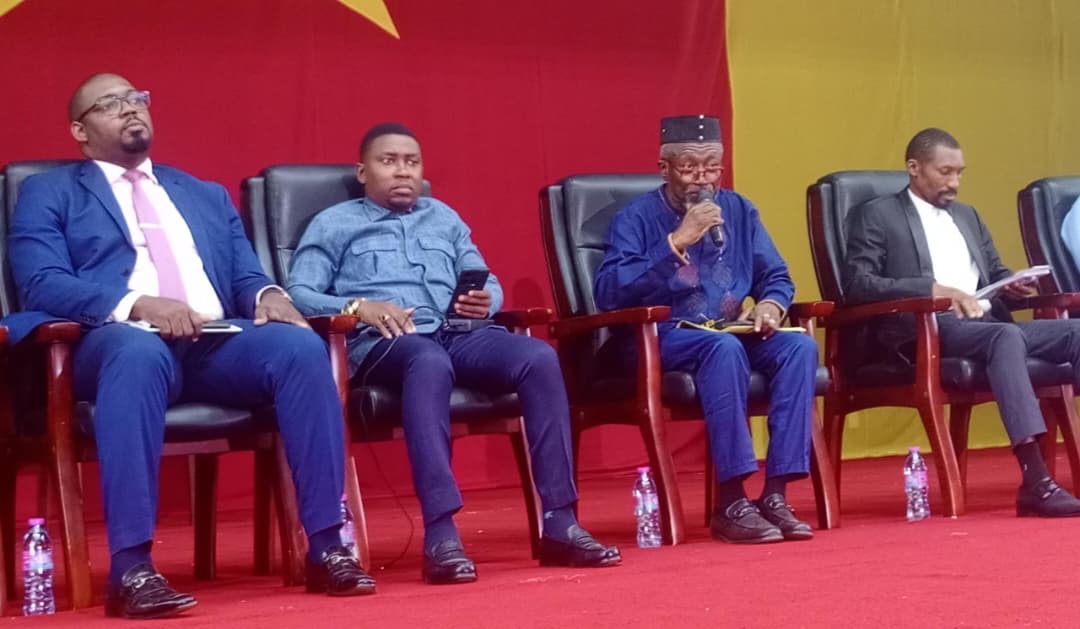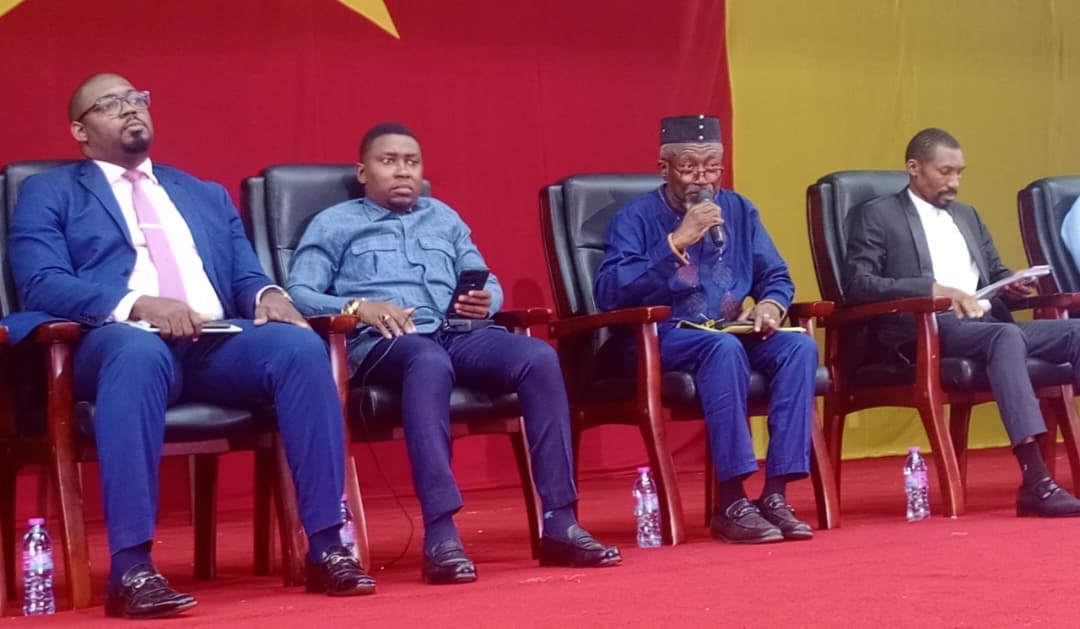
The second panel of the day addressed the theme “Governance and Institutional Support,” focusing on the structural and institutional mechanisms required to ensure effective youth policies and sustainable participation.
The session was moderated by a representative of the Ministry of Economy, Planning and Regional Development (MINEPAT) and Clément NGIMARTOLES.
The panel discussions were guided by key questions, including:
-
How can coordination among stakeholders be improved?
-
How can youth participation be strengthened at the national level?
-
How can institutional support mechanisms be guaranteed?
Contribution of MINEPAT
The representative of MINEPAT emphasized the importance of understanding how and why youth projects are planned and budgeted.
According to him, MINEPAT plays a central role in ensuring that youth policies are coherent, strategically aligned, and results-oriented.
He explained that:
“Strategic planning is essential to align the Youth Plan with the National Development Strategy (NDS30) and national participation priorities.”
He further detailed the Ministry’s responsibilities across four key areas:
Strategic Planning
MINEPAT ensures the alignment of youth strategies with national development priorities and long-term planning frameworks.
Programming
The Ministry translates youth-related strategic orientations into sectoral programmes, concrete actions, and measurable results.
Budgeting
In a context of limited resources, MINEPAT plays an arbitration role, ensuring that youth priorities are adequately reflected in national budget allocations, thereby moving from intention to implementation.
Monitoring and Evaluation
The Ministry promotes a results-based management approach, ensuring accountability, performance tracking, and strategic readjustment when necessary.
He concluded by stressing that:
“Effective youth governance requires coherent planning, realistic budgeting, and continuous evaluation of outcomes.”
Contribution of the Ministry of Decentralization and Local Development (MINDDEVEL)
The representative of MINDDEVEL presented the Ministry’s mission and highlighted its crucial role in decentralization and local development, both of which directly affect youth participation at grassroots level.
In the area of decentralization, MINDDEVEL is responsible for:
-
drafting and improving the legal framework governing Decentralized Territorial Collectivities (CTDs);
-
monitoring and evaluating the implementation of decentralization;
-
supervising local authorities, including actions and initiatives that benefit young people;
-
ensuring the proper application of civil status regulations;
-
exercising state oversight over local authorities.
In the area of local development, the Ministry works to:
-
promote local economic development within CTDs;
-
strengthen local governance;
-
improve living conditions of citizens, including youth;
-
reinforce the institutional capacities of local authorities.
The representative underlined that:
“Strengthening youth participation at national level requires strong and capable local institutions that can translate national policies into concrete local actions.”
This panel highlighted that effective youth participation and empowerment depend not only on sectoral programmes, but also on robust governance systems, coordinated planning, decentralized implementation, and sustained institutional support.